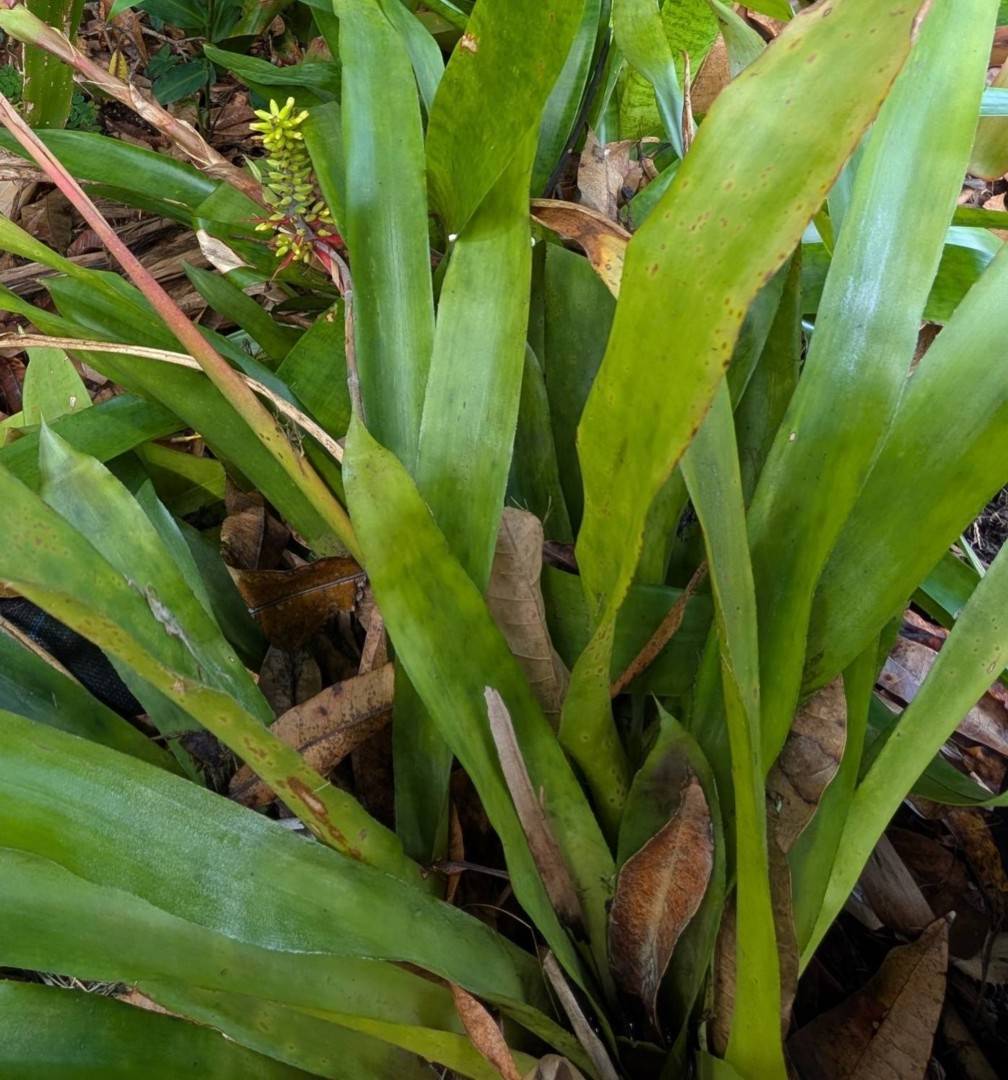
Plants epiphytic, an open rosette;
Leaves to 5.5 dm. long, up to 4 cm. wide, narrowed above the sheath, long acute apically, subentire to minutely serrulate, serrulations especially noticeable immediately above the sheath;
Sheath quite distinct, ovate, pale lavender to purple (when dry) adaxially, variously obscurely lepidote.
Inflorescence compound, all parts except petals variously and noticeably (when dry) stellate-wooly lepidote, the indument mostly filamentous rather than squamiform;
Scape erect, quite evident, slender, ca. 30 cm. long, white lepidote;
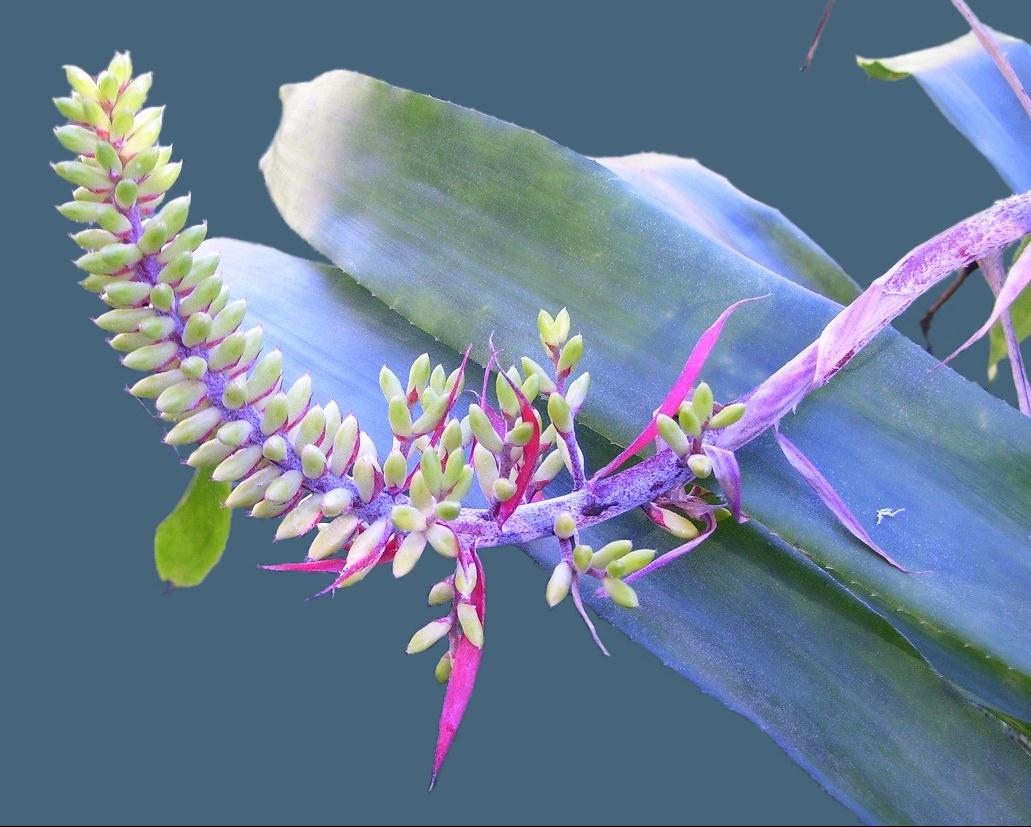
Scape bracts entire, attenuated apically, not obscuring the scape, those toward the apex enlarged and showy, bright red to pink like the primary bracts;
Primary bracts similar to the upper scape bracts, and greatly exceeding the short branches;
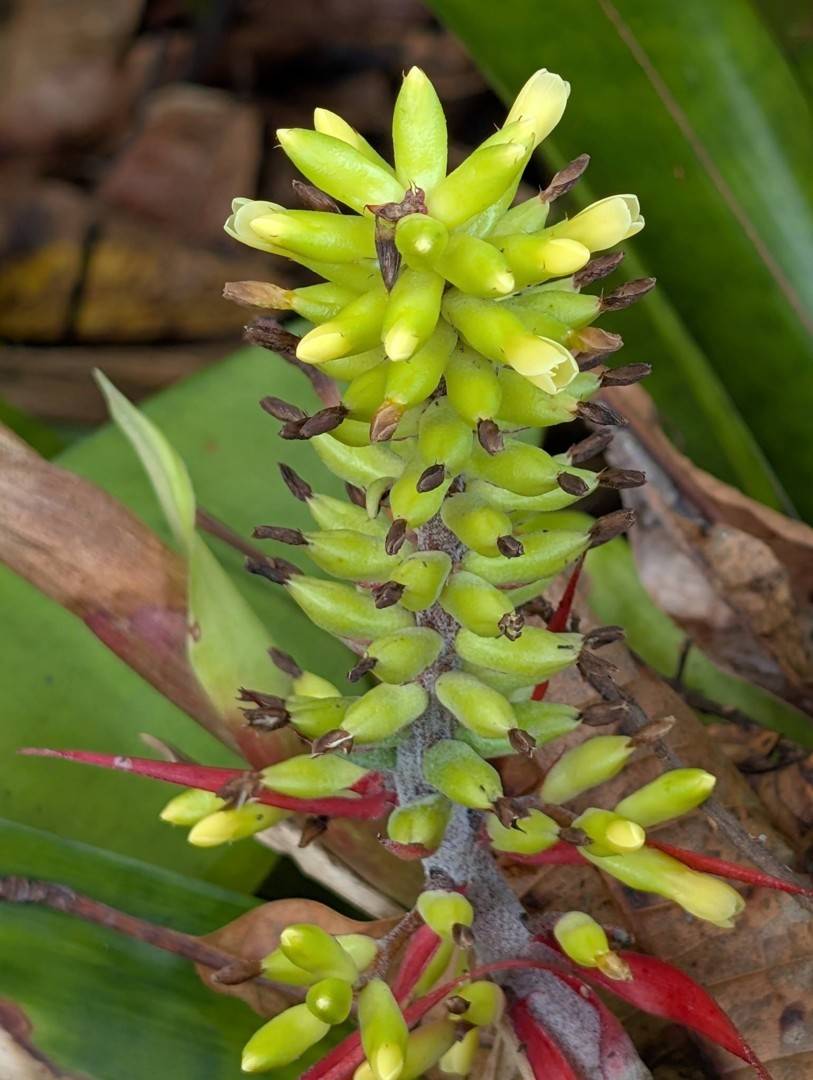
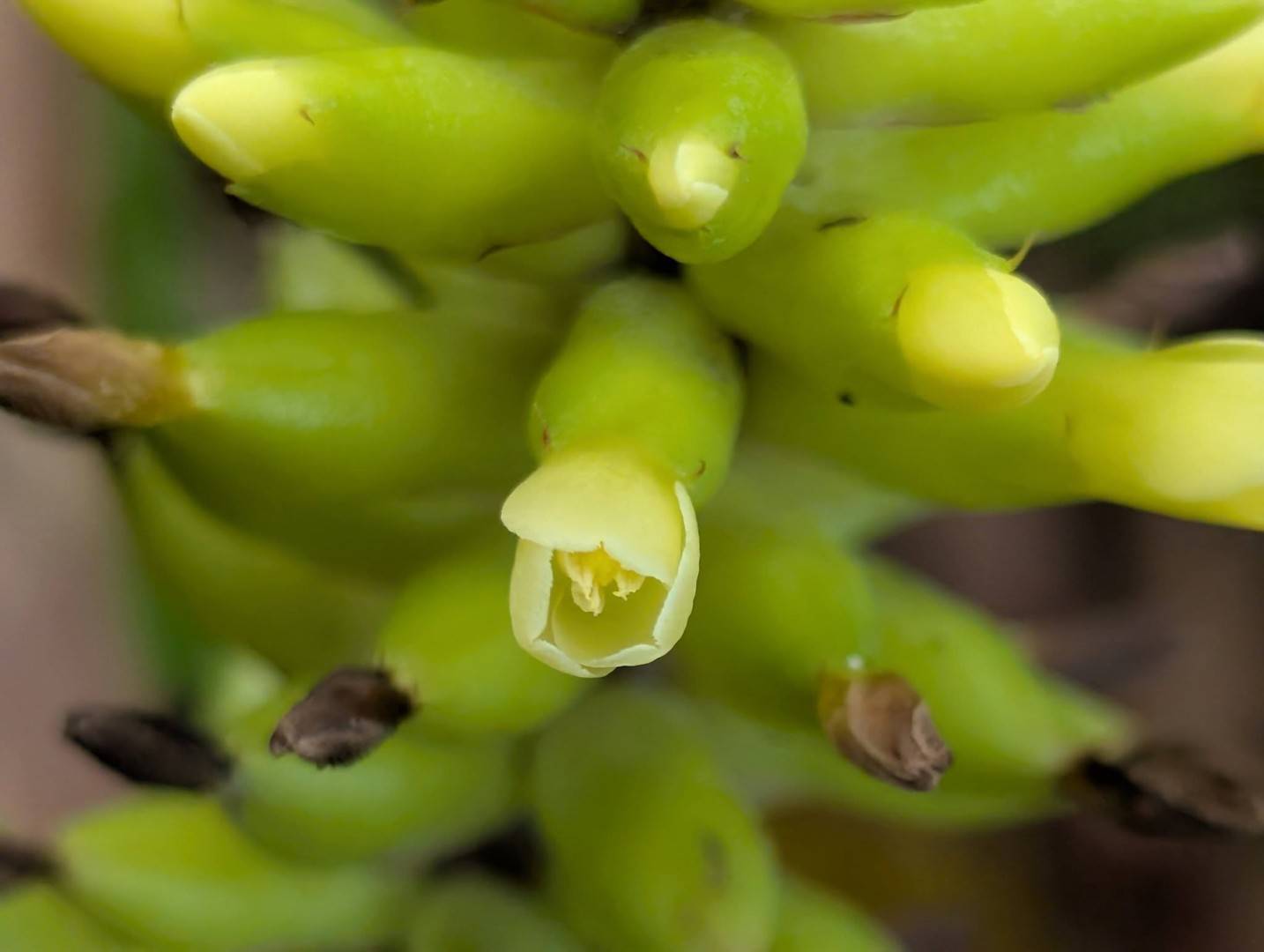
Branches few, ca. 1 cm. long, each with 2-3 flowers, the main rachis to ca. 6 cm. long with numerous sessile flowers;
Floral bracts minute;
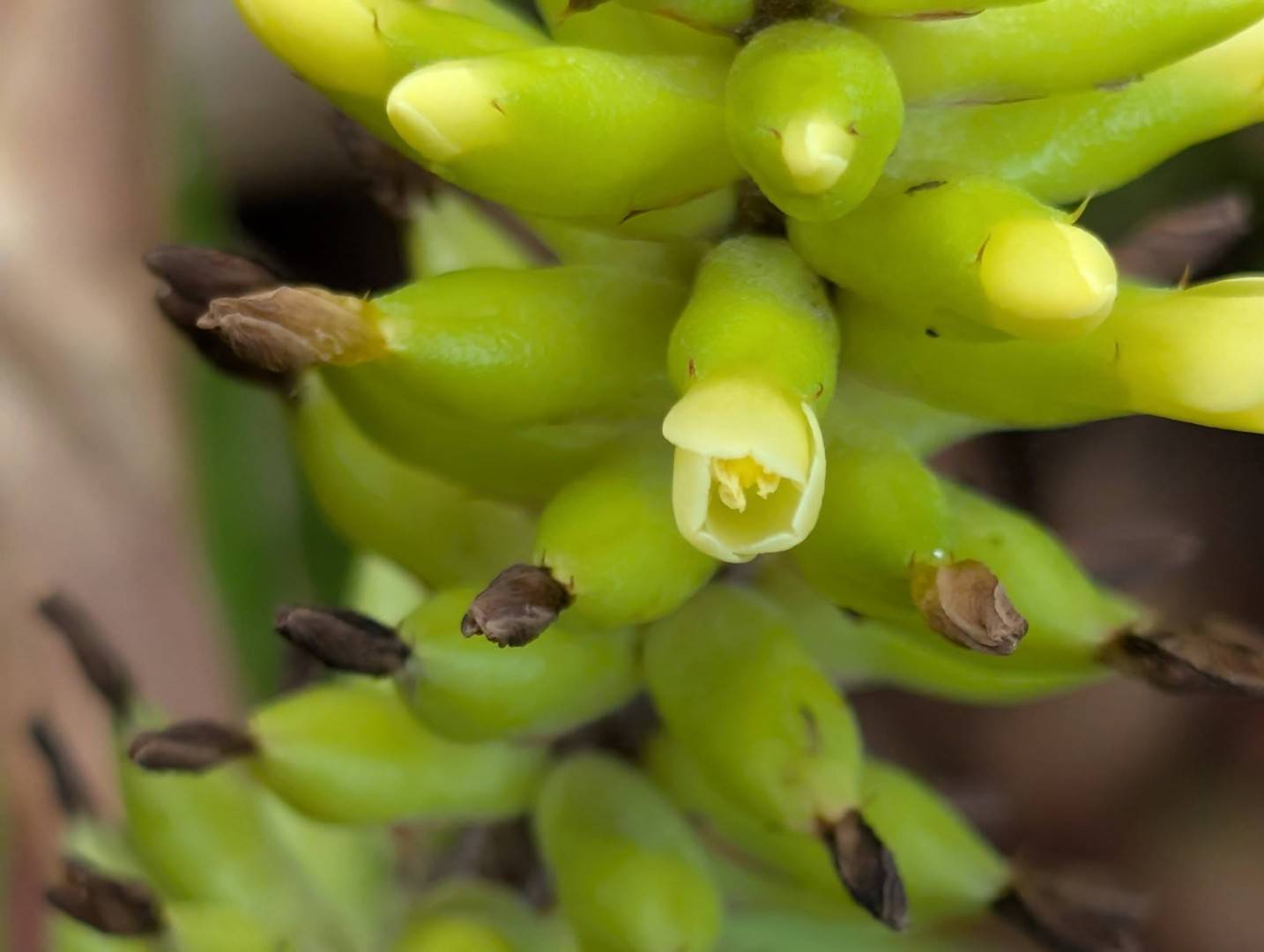
Flowers polystichous, to 15 mm. long;
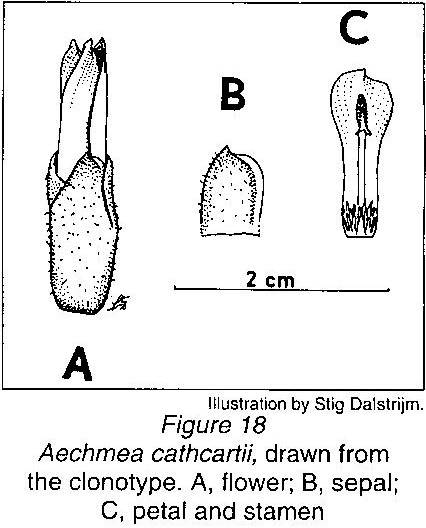
Sepals ca. 7-8 mm. long, strongly asymmetric, scarcely if at all conceivably mucronulate, virtually unarmed, very shortly connate;
Petals spathulate, ca. 12 mm. long, white-cream colored, each bearing two fimbriate appendages above the base;
Stamen filaments alternately completely free and adnate to the petal up to the level of the free portion of the petal appendages, dilated apically, dorsifixed, exceeding the stigma in length;
Ovary strongly wrinkled or ribbed when dry (at anthesis), placentae apical;
ovules caudate;
epigynous tube ca. 1.5 mm. deep;
Type. D. Cathcart s. n. (holotype, sheet #132032, Reed Herbarium).
Known only from the type collection by Dennis and Daris Cathcart of Bradenton, Florida. The original plant was collected "on September 26, 1976 in Guatopo National Park, Estado Miranda, Venezuela. It was at 2300 feet of altitude, a few hundred yards off the main road thru the park." The type specimen is preserved from a cultivated plant now in the collection of C.F.Reed at Cub Hill, Maryland.
In Smith and Downs' Flora Neotropica Monograph (No.14, part 3 Bromelioideae) this species keys to subgenus 2. Lamprococcus, under which it keys to Ae. victoriana from which it is easily distinguished by the white rather than red ovary, and the greatly enlarged showy primary bracts and upper scape bracts.
Although Aechmea cathcartii was first described in this journal (Reed & Read, 1981), it apparently has not been widely grown by hobbyists. Perhaps it needs a "reintroduction" to the readers of these pages.
The type of A. cathcartii C.F.Reed & R.W.Read was collected in 1976 from northern Venezuela where it grew as an epiphyte in the rainforests of Parque Nacional Guatopo. When described it was known from only a single collection, but now several additional specimens have been identified in herbaria, all originally misdetermined as A. nudicaulis, in spite of the fact that the authors of A. cathcartii compared their new species to A. victoriana in subgenus Lamprococcus.
Aechmea nudicaulis is a polymorphic and widespread species and is the type of subgenus Pothuava. It does appear to have an affinity with A. cathcartii as do some members of the genus Ronnbergia. The ronnbergias, with their inflorescenses of muted colors and with spreading corollas, are probably adapted to insect pollinators. In contrast, hummingbirds probably find the "hot-colored" inflorescences and tubular corollas of the aechmeas more to their liking. Perhaps the differences between Ronnbergiu and Aechmea are due more to recent adaptations to different sorts of pollen vectors than to phylogeny (descent).
Flowering specimens of A. cathcartii are 35-60 cm in diameter and 30-50 cm tall. This species requires warm, moist and shaded conditions. I suspect one factor accounting for its scarcity in horticulture is its intolerance of even short periods of freezing temperatures (0°C.). Also, the inflorescence is not especially long-lived; it lasts in good color for two to three weeks.
Aechmea cathcartii was poorly illustrated when described. The cover photo and drawing presented here will, hopefully, alleviate any questions concerning the nature and identification of this species.